
Robert Trent Jones Sr.: The Architect Who Built Modern Golf
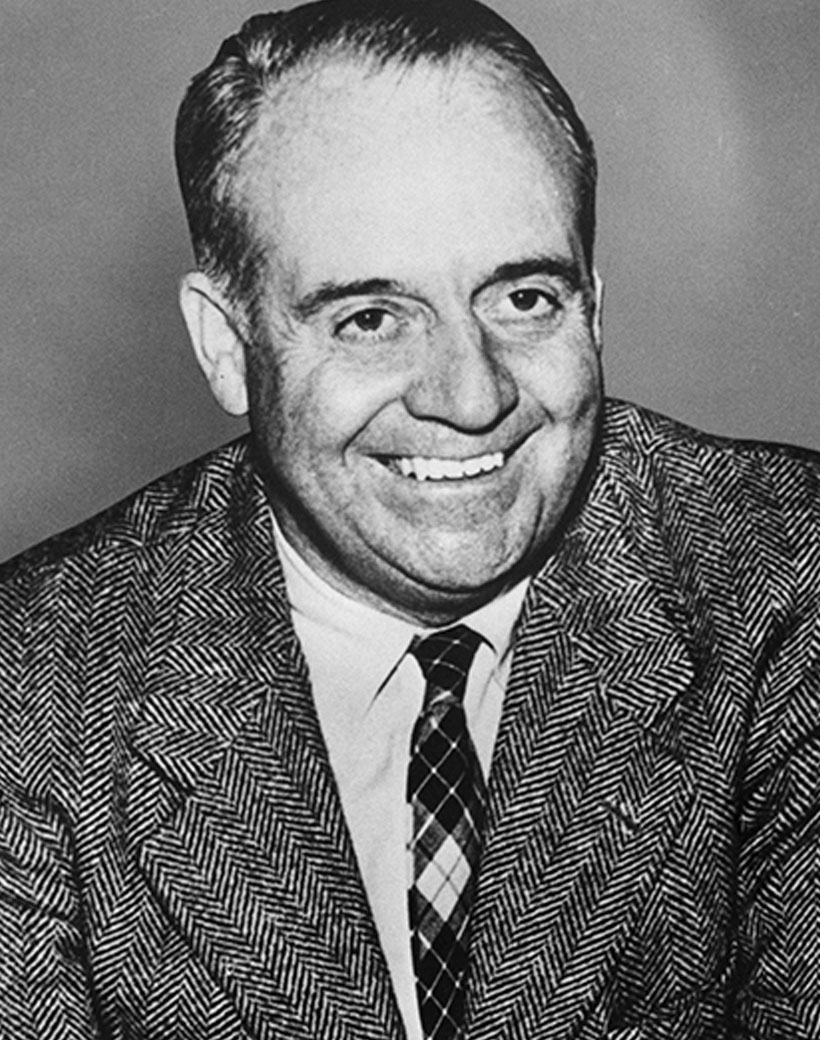
Robert Trent Jones Sr. (1906-2000) didn't just design golf courses. He defined what an American championship course was supposed to be, then spent five decades building that vision from New England to Hawaii, from Scotland to Morocco. With more than 500 courses to his credit across 45 U.S. states and 35 countries, he could claim with accuracy: "The sun never sets on a Robert Trent Jones golf course."
From Cornell to the World Stage
Born in England and raised in East Rochester, New York, Jones worked as a caddie at the Country Club of Rochester before earning a place at Cornell University. Unable to find a curriculum that matched his vision, he designed one himself, combining landscape architecture, civil engineering, and agronomy. That self-made education gave him something no other architect of his era had: a scientific foundation for what had previously been a craft passed down through apprenticeship.
His early career took him to Canada alongside Stanley Thompson, where he worked on some of that country's finest resort layouts. By the 1930s he was designing public courses under New Deal funding. But the partnership that changed everything came after World War II, when Jones teamed with Bobby Jones (no relation) to build Peachtree Golf Club outside Atlanta. It was here he introduced the elongated "runway" tee, a simple innovation that let a single course play fairly for scratch golfers and high handicappers alike. He spent the rest of his career refining that idea of democratic design: courses that challenged the best while remaining enjoyable for the rest.
The Monster and the Major Championship Era
In 1951, Jones renovated Oakland Hills outside Detroit ahead of the U.S. Open. Ben Hogan shot 67 in the final round to win but famously said he "brought the Monster to its knees." The nickname stuck, and so did Jones's reputation. He had shown that a course renovation could elevate the drama of a major championship, separating the field cleanly. Over the following two decades, Jones designed or renovated more than half of all U.S. Open venues: Atlanta Athletic Club, Baltusrol, Bellerive, Congressional, Hazeltine, Southern Hills, Oakland Hills, the Olympic Club. His courses hosted the PGA Championship 17 times and the World Cup 6 times.
Bellerive Country Club in St. Louis, opened 1959, and Atlanta Athletic Club, redesigned in 1967, stand as two of the defining championship venues of his middle career, both ultimately serving as U.S. Open hosts.
Design Philosophy: Hard Par, Easy Bogey
Jones's design mantra was "a hard par but an easy bogey." The phrase captures his core approach: courses should separate elite players while still giving ordinary golfers a route around the layout. He pulled this off through what he called "heroic" design, offering clear risk/reward options at key holes rather than simply punishing any errant shot. A wide fairway with a severe bunker cluster on the ideal line forced a strategic decision from the expert player; the same hole gave the casual golfer room to lay up and advance.
His signature elements became widely recognized: elongated tees, large elevated greens protected by "yawning traps," bold use of water hazards, and generous fairways that narrowed toward the green complex. He was also the first architect with formal agronomy training, and he helped introduce improved turfgrasses to courses in Europe and Hawaii, raising playing conditions on continents that had largely relied on native grasses.
Spyglass Hill and the Pebble Beach Trilogy
When the Pebble Beach Company commissioned a third major course at their Monterey Peninsula resort, Jones delivered Spyglass Hill Golf Course in 1966. Opening holes sweep through white sand dunes before diving into dense Del Monte Forest. Ranked No. 76 nationally by Golf Digest, Spyglass remains among the most demanding resort courses on the West Coast. Jones considered it among his finest work: "I've had knowledgeable people tell me that Spyglass is the best course on the Monterey Peninsula."
The Alabama Trail: Largest Design Contract in History
In 1990, at age 84, Jones accepted what became the largest single golf design contract ever awarded. David Bronner, CEO of the Retirement Systems of Alabama, commissioned Jones to build 18 courses across Alabama to diversify the state pension fund's assets and generate tourism. The Robert Trent Jones Golf Trail eventually grew to 468 holes at 11 sites statewide, all public, with layouts at Cambrian Ridge, Capitol Hill, Grand National, Highland Oaks, Lakewood, Magnolia Grove, Oxmoor Valley, Ross Bridge, and Silver Lakes. The Trail stands today as a rare case where a state's golf infrastructure was designed essentially all at once, to a single consistent standard.
Stymie tracks several Trail courses in Alabama, including the Alpine Bay Golf Club and the Backbreaker Mindbreaker Course at Silver Lakes.
170 Courses on Stymie
Stymie catalogs 170 courses attributed to Robert Trent Jones Sr., spanning 37 states from Vermont to Hawaii. Two hold Golf Digest Top 100 rankings: Peachtree at No. 22 and Spyglass Hill at No. 76. The full roster reaches from modest public layouts built in the 1930s through resort courses completed just before his death in 2000. His sons Robert Trent Jones Jr. and Rees Jones both became significant architects in their own right, extending a family footprint that touches nearly every corner of American golf.
His self-described rule for every project: "Give your course a signature." After 500 courses, it's fair to say American golf still plays by his.
View all courses by Robert Trent Jones, Sr. on StymieNever miss a tee time
Set alerts for any course and get notified instantly.
Set Your First Alert — Free